Oro rosso nascosto»: trasformazione umana e iconografia del rapporto a cinquant’anni da La marionetta e il burattino di Massimo Fagioli
Parole chiave:
Massimo Fagioli, Cupid and Psyche, editorial graphics, human transformation, man-woman relationship, creativity, Collective Analysis.Abstract
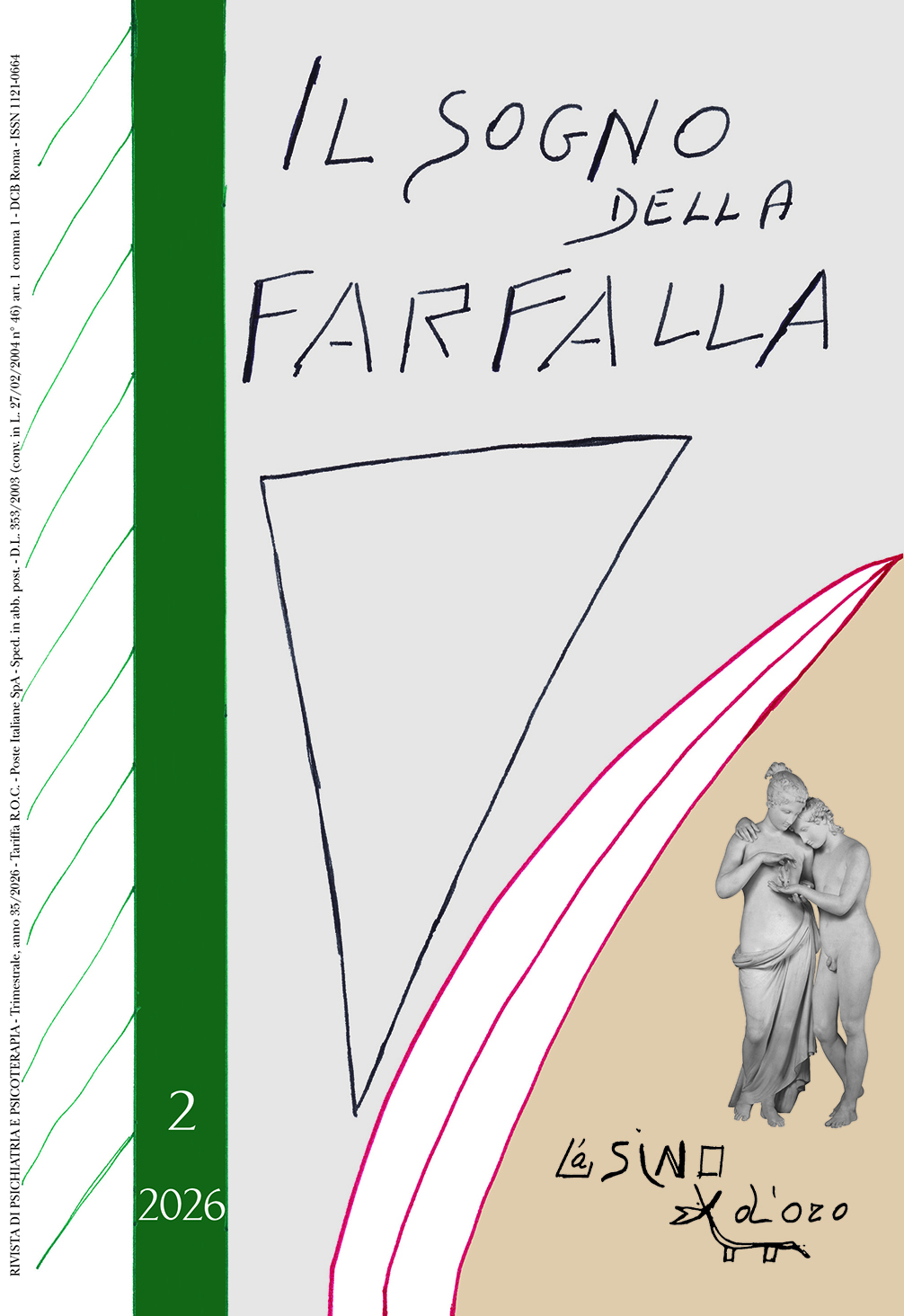
Fifty years after the publication of La marionetta e il burattino (1974) and Teoria della nascita e castrazione umana (1975), the aim of this essay is to examine Massimo Fagioli’s thought through the iconographic choices of the covers of his foundational volumes. In 1981, the decision to adopt the image of Antonio Canova’s Cupid and Psyche represents a communicative turning point and an opportunity for theoretical elaboration: at a time of profound cultural tension, Fagioli employs a universal image to declare the centrality of the man-woman relationshi and to reject the Oedipal paradigm. This choice was in line with a broader debate on creativity that the psychiatrist developed between 1980 and 1981, contrasting the notion of the isolated artist and inert object with a view of art as a practice of reciprocal transformation between subjects.
The transition in 2007 to the depiction of Cupid and Psyche standing against a red background marks a further evolution: from care to reciprocity, from dependence to separation, which in turn fosters creative thought. The metaphor of the «hidden red gold» within the man-woman relationship therefore emerges as a visual symbol of a theory intertwining body and mind, sensitivity
and knowledge, individual identity, and political dimension. Through an analysis of these images within their historical and cultural context, the essay offers an interpretation of the covers as true theoretical statements capable of communicating the radicality of a thought that considers human transformation through relationship as its core.